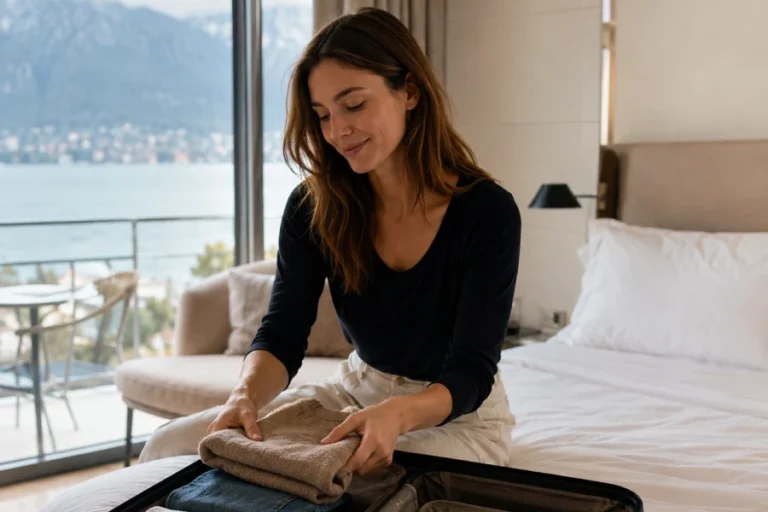
A carry-on is useful when it supports the trip you are actually taking, not an imaginary emergency-filled version of it. One more outfit, another device, and every toiletry can turn a light bag into a burden before you reach the airport. Carry-on packing strategy gives the week before departure a useful shape instead of letting every reminder compete for attention. The goal is not to control every outcome. It is to put essential details in a form that makes the next practical choice easier. A simple, repeatable rhythm creates more room for curiosity because the basics no longer need to be carried entirely in your head. It also helps you stop researching when you already have enough information. Think of this as a calmer runway between ordinary life and the trip itself. For a practical starting point, consider a carry-on edit that travels well.
Start a Carry-On Packing Strategy With Access
The first items in your bag should be the ones you may need before you reach the destination. Keep documents, payment, essential medication, accommodation details, and charging basics together where you can find them quickly. Think through the airport sequence from security to boarding to the first transfer. Each step should require less searching, not more unpacking. Give yourself enough time to make the choice without turning it into an all-day task. A short written note is often more reliable than relying on memory when several details change at once. Carry-on packing strategy makes this approach keeps the decision practical while still leaving room for a trip to feel spontaneous. It also makes it easier to notice what is truly necessary and what can safely be left flexible. Use one consistent location for the information so that you can find it quickly when your attention is elsewhere. That clarity creates more energy for the part of travel that matters: being present once the journey begins.
Choose Clothing That Works More Than Once
Clothing takes up visual space quickly, so choose pieces that combine easily and can be worn again. A few repeatable tops, one reliable bottom, sleepwear, underwear, and a light layer often create more options than a pile of special outfits. Wear the bulkiest shoes or jacket when practical. Pack for real functions, not for every hypothetical occasion that may never happen. Give yourself enough time to make the choice without turning it into an all-day task. A short written note is often more reliable than relying on memory when several details change at once. This approach keeps the decision practical while still leaving room for a trip to feel spontaneous. It also makes it easier to notice what is truly necessary and what can safely be left flexible. The purpose is a calmer next step, not a flawless plan that expects every moment to behave perfectly. That clarity creates more energy for the part of travel that matters: being present once the journey begins.
A Carry-On Packing Strategy Needs an Honest Toiletry Edit
Small toiletries multiply because each one seems harmless on its own. Lay everything out, separate true essentials from nice-to-haves, and carry only the quantities you will use. Keep liquids simple and medication accessible. The aim is to preserve the version of your routine that helps you feel human after travel without filling the bag with duplicates. Give yourself enough time to make the choice without turning it into an all-day task. A short written note is often more reliable than relying on memory when several details change at once. Carry-on packing strategy makes this approach keeps the decision practical while still leaving room for a trip to feel spontaneous. It also makes it easier to notice what is truly necessary and what can safely be left flexible. Use one consistent location for the information so that you can find it quickly when your attention is elsewhere. That clarity creates more energy for the part of travel that matters: being present once the journey begins.
Keep Tech and Comfort Deliberate
Tech works best when it removes friction rather than adding another charging problem. Bring the cables, adapter, power bank, and headphones you will actually use, then stop. A refillable bottle, a snack, and one comfort item can matter more than a bag full of random extras. Keep these items together so they remain easy to reach. Give yourself enough time to make the choice without turning it into an all-day task. A short written note is often more reliable than relying on memory when several details change at once. This approach keeps the decision practical while still leaving room for a trip to feel spontaneous. It also makes it easier to notice what is truly necessary and what can safely be left flexible. The purpose is a calmer next step, not a flawless plan that expects every moment to behave perfectly. That clarity creates more energy for the part of travel that matters: being present once the journey begins. When useful, return to a lighter bag framework to keep the categories visible rather than scattered.
A Carry-On Packing Strategy Plans for Delays, Not Disaster
You do not need to pack for every possibility, but a few backups are worth protecting. Include a fresh change, basic medication, a snack, and enough spare space to manage a layer or small purchase. These details help during delays, early arrivals, or a temporarily inaccessible room. They are practical insurance, not proof that something will go wrong. Give yourself enough time to make the choice without turning it into an all-day task. A short written note is often more reliable than relying on memory when several details change at once. Carry-on packing strategy makes this approach keeps the decision practical while still leaving room for a trip to feel spontaneous. It also makes it easier to notice what is truly necessary and what can safely be left flexible. Use one consistent location for the information so that you can find it quickly when your attention is elsewhere. That clarity creates more energy for the part of travel that matters: being present once the journey begins.
Finish With a Carry-On Packing Strategy You Can Repeat
The best packing method improves through use. Notice what you touch immediately, what remains unopened, and which pieces make the trip feel lighter. Keep a personal base list and change only the weather layer, destination-specific item, or special event piece. A repeatable system frees you from starting from zero before every flight. Give yourself enough time to make the choice without turning it into an all-day task. A short written note is often more reliable than relying on memory when several details change at once. This approach keeps the decision practical while still leaving room for a trip to feel spontaneous. It also makes it easier to notice what is truly necessary and what can safely be left flexible. The purpose is a calmer next step, not a flawless plan that expects every moment to behave perfectly. That clarity creates more energy for the part of travel that matters: being present once the journey begins. A final review with your final packing pass can keep the close-out simple without turning it into another project.